
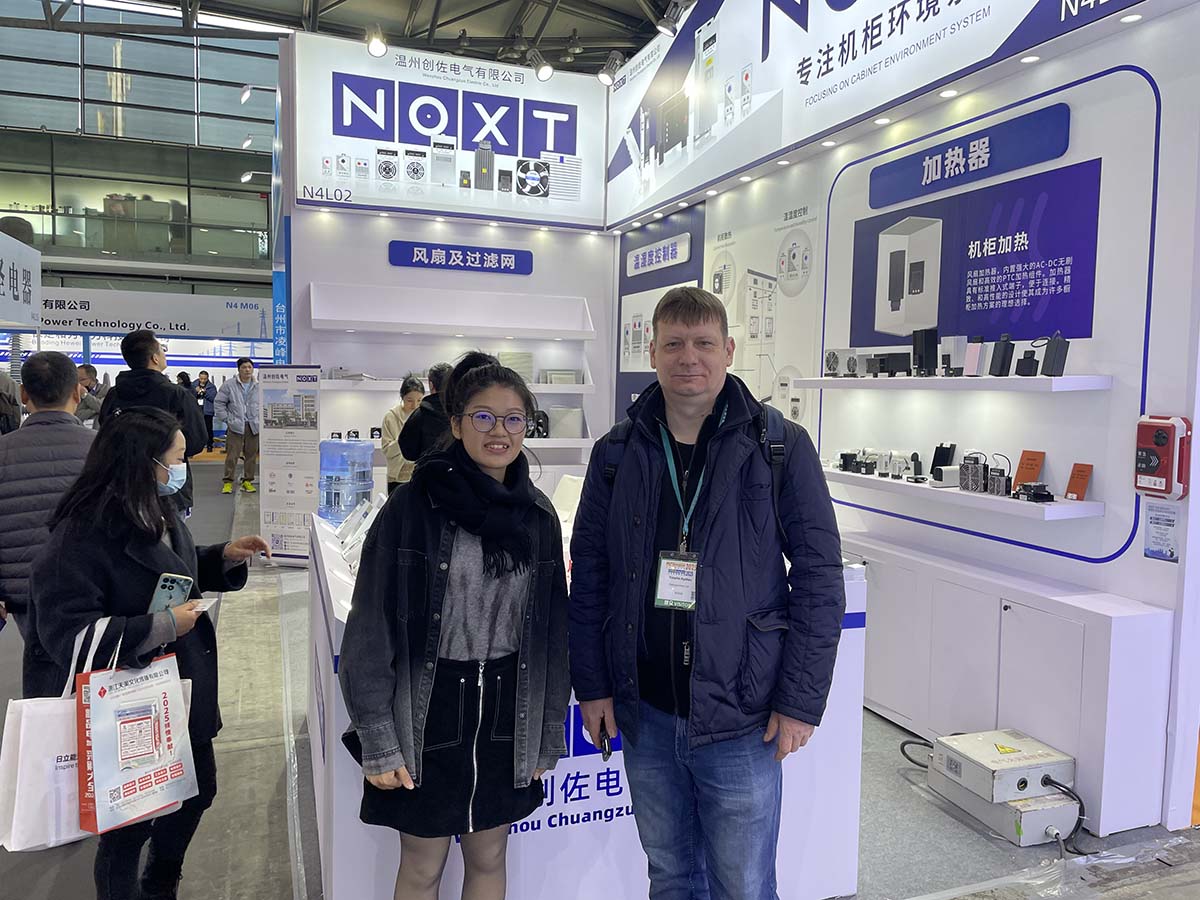
The Vietnam Electricity and New Energy Exhibition 2026 ran from 15 to 17 July. NOXT hosted booth 379, where the conversation centred on a problem that Southeast Asian operators know well: high humidity that turns into water inside outdoor electrical cabinets.
Why tropical climates make the problem sharper
In a tropical climate the cabinet never fully dries out. Daytime heat pushes moisture-laden air out through the seals, night-time cooling pulls fresh humid air back in, and condensation forms on busbars, terminals and relay contacts. The cycle repeats daily, so corrosion and tracking faults build up faster than in temperate regions.
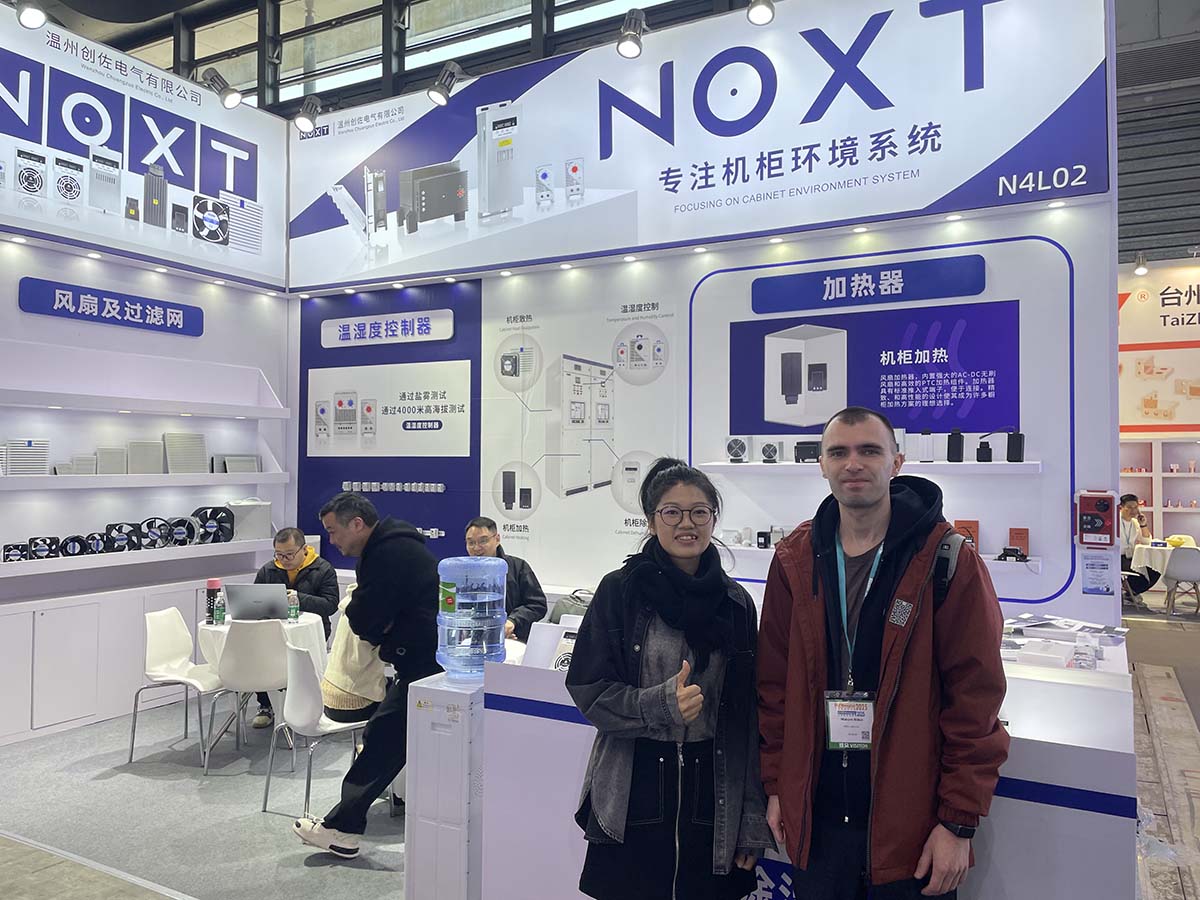
What NOXT showed at booth 379
The stand presented cabinet dehumidifiers sized for compact and high-volume enclosures, AC and DC PTC cabinet heaters, thermostat-controlled fan heaters, filter fans for IP54 ventilation, and the thermostat, hygrostat and digital controller range that switches it all.
Visitors from utility and renewables companies asked for two things in particular: units that tolerate a heavy dust load, and control settings that keep energy use down when ambient humidity swings hard between the rainy and dry seasons.
Renewable energy across the region
Solar and energy storage visitors were a large share of booth traffic. Their cabinets sit outdoors for years, and rising humidity around PV combiner boxes and battery racks makes sealing alone insufficient. Several teams asked for a combined package: dehumidifier plus heater with one controller managing both.
Requests logged at booth 379 were followed up with sizing sheets and quotations after the show.
For cabinets in tropical or coastal conditions, send the enclosure size, internal load and site humidity range. We will return a condensation control specification for the site.