
Every solar installer has been there. You open a DC combiner box at a utility-scale plant or a commercial rooftop array, and there’s water beading on the inside of the lid. The box is new. The gaskets look fine. The conduit entries are sealed.
And yet here’s moisture, sitting right next to live DC circuits carrying hundreds of volts. It’s one of the most common, most preventable causes of premature PV equipment failure, and it’s almost never a leak.
Moisture inside solar equipment doesn’t announce itself with a puddle. It shows up as a blown fuse you can’t explain, a ground-fault alarm that comes and goes, a string that underperforms, or an inverter that trips at dawn for no obvious reason.
If you do solar service work, learning to spot and fix condensation in solar combiner boxes will save you more return trips than almost any other skill.
Why solar boxes sweat more than other enclosures
Combiner boxes and inverters have a few things working against them. They sit outdoors, often on a roof, where they see the full daily temperature swing. They’re dark-colored, so they bake in the sun during the day and radiate heat fast on clear nights.
And they’re full of metal: bus bars, fuse holders, terminals, and connectors that cool down quickly and become perfect condensation surfaces.
Here’s the sequence that produces “water in the box.” During the day the enclosure heats up, and the air inside expands and escapes through the seals and conduit. At night the box cools, the air contracts, and the box sucks in outside air to equalize.
That air is humid. When the internal metal cools below the dew point, usually in the hours just before sunrise, moisture condenses on the surfaces. The box never leaks a drop, and it can happen on a perfectly clear night with no rain at all.
The worst mornings are the ones after a hot day followed by a cool, clear night, which is also why the problem peaks in spring and fall.
Add one more solar-specific factor: night-time operation. Many modern inverters and monitoring systems run off the array at night to keep electronics alive, and some combiner boxes sit close to the panels where they cool faster than the rest of the system. Any component that’s cooler than the surrounding air is a magnet for condensation.
What moisture does to PV equipment
- Water and DC voltage are a nasty combination: Moisture on a bus bar or fuse holder starts corrosion, and corrosion adds resistance. In a DC circuit carrying tens of amps, that resistance turns into heat, which accelerates the corrosion further. Left long enough, connections fail, fuses blow, or terminals burn.
- Even more common is the leakage-current story: Dust and moisture on the inside of a box create a conductive path from the DC circuit to the grounded enclosure. That’s a ground fault, and depending on the system, it can trip the inverter, set off an alarm, or just quietly leak current and drag down performance. Many O&M crews have chased an intermittent ground-fault alarm for weeks before opening the box and finding green corrosion on a fuse holder. The moisture that caused it had dried up days earlier; the damage was the clue.
- Insulation resistance testing tells the same story: If you’re getting low or erratic insulation readings that improve on dry days, condensation is a prime suspect. The readings change with the weather because the moisture is changing with the weather, and that signature is how you know you’re chasing condensation rather than a damaged cable.
The fixes that actually work
Fix the real leaks first. Not every case is condensation. Rain can work its way in through a poorly sealed conduit entry, a cracked gland, a gasket that wasn’t seated, or a box mounted where water pools. Before you assume condensation, check for actual water entry, and reseal anything questionable. But if the box is sealed and still sweats, move to the environmental fixes.
Let the box breathe, deliberately. A sealed box breathes anyway, through pressure changes, so the choice isn’t “sealed versus vented,” it’s “random uncontrolled breathing versus controlled.” A small breather vent with a moisture barrier lets pressure equalize without pulling in liquid water, and it helps in a lot of installations. Some combiner boxes also benefit from a low-point drain, so any water that does condense has somewhere to go instead of pooling on the bus bars.
Add controlled heat. This is the standard fix for cold-climate and high-swing sites: a low-wattage anti-condensation heater, ideally controlled by a humidity sensor, mounted inside the box. You’re not trying to keep the box warm; you’re keeping the internal surfaces a few degrees above the dew point so water physically can’t form. A 10 to 30 watt heater with a thermostat or hygrostat, sized to the box, runs very little over a year and protects every connection in the box. On systems that power down at night, the heater is what keeps the morning dew off the fuse holders.
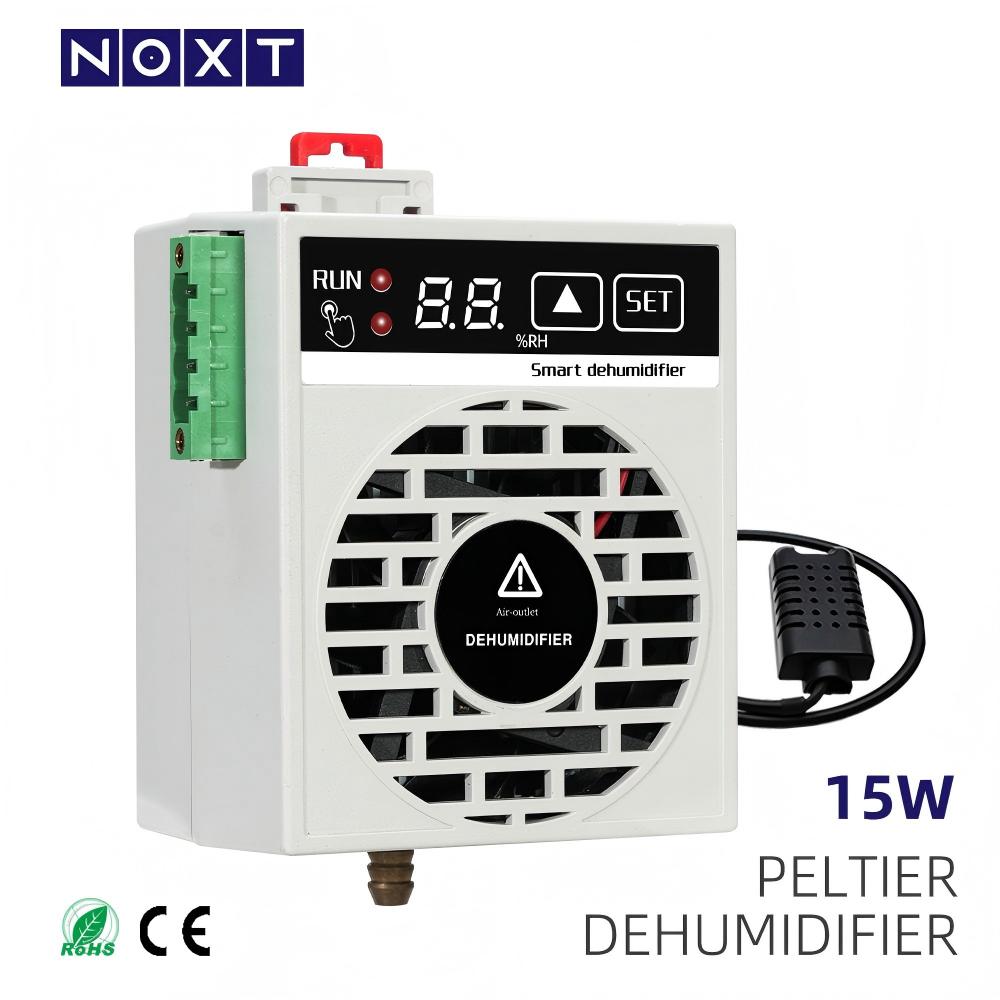
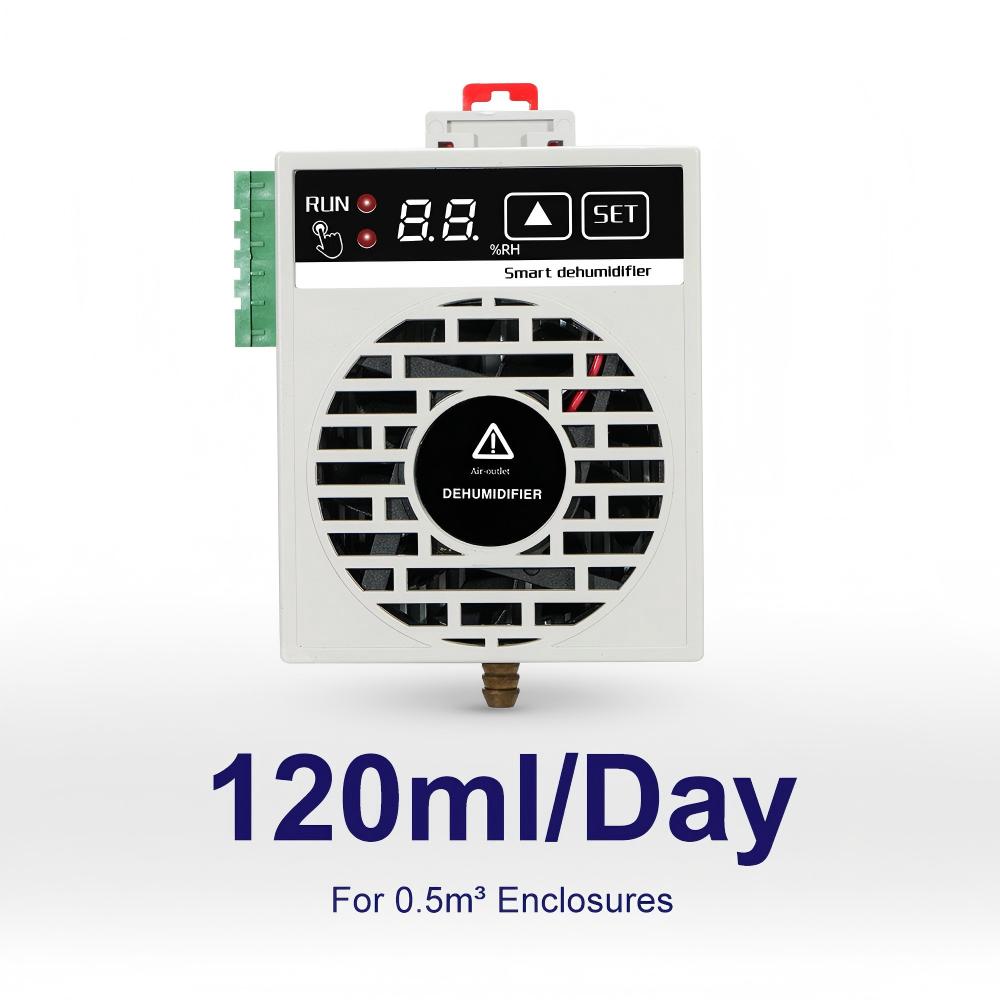
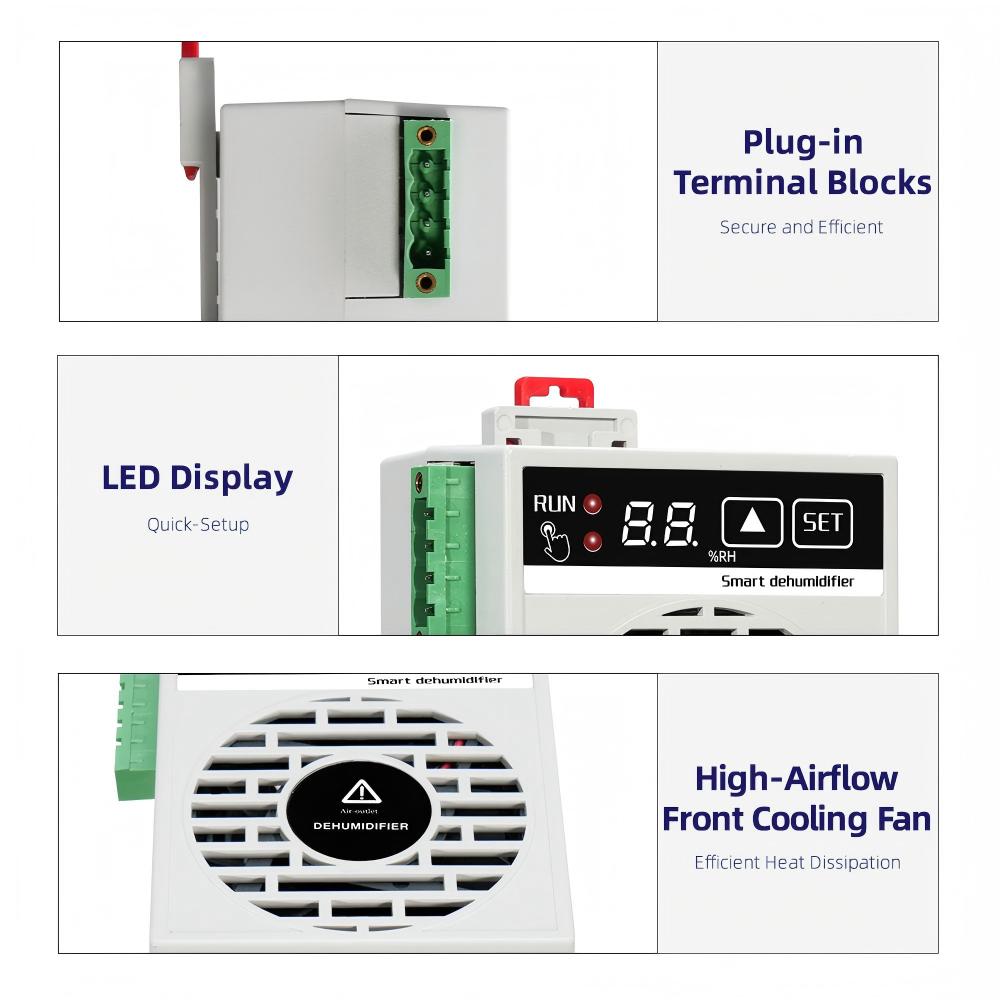
Consider a compact dehumidifier for the worst sites. For coastal arrays, agricultural sites with heavy morning fog, or boxes that have already corroded once, a thermoelectric enclosure dehumidifier that actively pulls moisture out of the air is a step beyond a heater. It holds the internal humidity at a set level rather than just raising the dew point, and it keeps working even when the box is cold. It’s more equipment than a heater, but on a site that corrodes every box you install, it’s cheaper than replacing fuse holders twice a year.
Coat the vulnerable parts. Dielectric grease on connections and an anti-corrosion coating on bare metal can slow the damage while the environmental fixes take hold. Some crews also use conformal coating on PCBs inside inverters and monitoring gear. None of these replace moisture control, but they buy you time and reduce the failure rate on hardware that’s already marginal.
A practical inspection checklist
Add this to your O&M rounds and you’ll catch the problem early, when it’s a service call instead of an equipment replacement:
- Open combiner boxes and inverters on a cool morning, not at noon, and look for beading, rust, or green corrosion on bus bars and fuse holders.
- Check that every conduit entry and gland is sealed, and that rain hoods and drip loops are doing their job.
- Watch for the weather signature: if ground-fault or insulation alarms cluster in spring and fall mornings, suspect condensation.
- Note which boxes sit in shade or on cold north exposures; they cool fastest and condense first.
- After any repair, seal the box back up properly and consider adding a breather or a small heater if the site has a history of moisture.
The bottom line for solar crews
Condensation in solar combiner boxes isn’t bad luck and it’s not a bad product. It’s physics, and physics responds to engineering. Seal the obvious leaks, give the box controlled ventilation, and add a thermostat-controlled heater or a compact dehumidifier on sites that need it.
That combination keeps the morning dew off live DC terminals, which keeps the fuses intact, the alarms quiet, and the strings producing. On a system you’re paid to keep running for 25 years, a $30 heater is the cheapest insurance policy you’ll ever install.