
Somewhere between “throw a few silica gel packets in there” and “bring in the building’s HVAC engineer” there’s a whole category of equipment most people have never heard of: the enclosure dehumidifier.
It’s a compact unit that mounts inside a control cabinet, switchgear, or any sealed electrical box, and it quietly does one job, pulling water vapor out of the air before it can condense on your terminals, breakers, and boards.
If your cabinets keep corroding despite new gaskets, or you’re tired of replacing silica gel every month, this guide is for you. Here’s how these units actually work, where they fit, and how to pick the right one without overbuying.
Three ways to “dehumidify” a cabinet
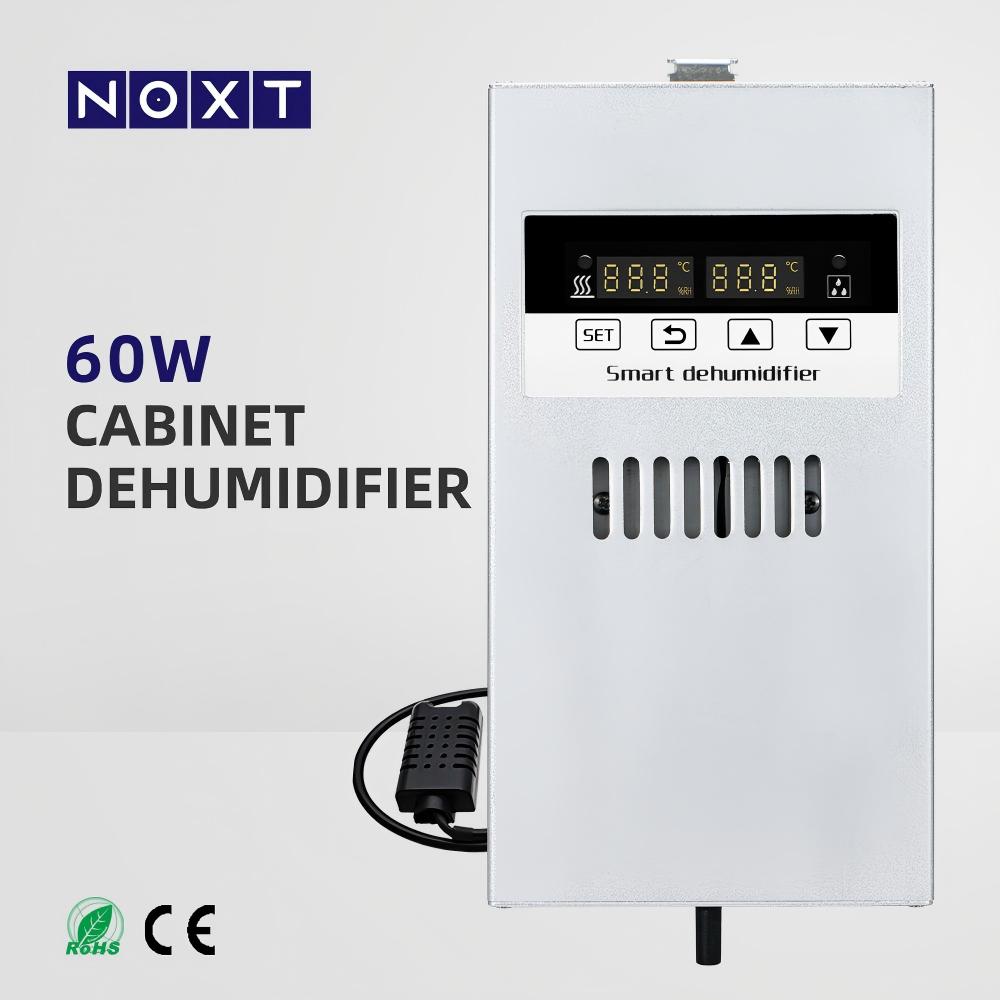
Before you compare products, it helps to know that the market really contains three different approaches, and only two of them actually remove water from the air.
- Heaters: The most common approach in U.S. panels is an enclosure heater with a thermostat or hygrostat. A heater doesn’t remove moisture; it raises the temperature inside the cabinet so the dew point stays out of reach and water never condenses. It’s simple, proven, and often the right answer. The catch is that the water vapor is still in the air, so the protection disappears the moment the power goes off, and on a cold site a heater can run a lot.
- Desiccants: Silica gel and other moisture-absorbing products genuinely pull water out of the air. The problem is capacity. A small packet saturates fast in a humid cabinet, and once it’s full it stops working, or worse, slowly releases the moisture back. Desiccant bags can carry a small, rarely opened junction box in a dry building for a while. For an electrical enclosure that lives outside or in a humid plant, they’re a maintenance trap. Somebody has to check them constantly, and most facilities don’t.
- Thermoelectric dehumidifiers: This is the “smart” option, and it’s what most people mean when they talk about an electrical enclosure dehumidifier today. Inside the unit, a semiconductor module gets cold on one side and warm on the other, like a mini Peltier cooler. A tiny fan draws cabinet air across the cold side, moisture condenses into droplets, and the unit drains or evaporates the collected water while a humidity sensor cycles it on and off to hold a set point. The unit actually removes water from the air, works around the clock, and needs no refills. Think of it as a small, sealed refrigerator for the cabinet, except the cooling is just there to squeeze the water out.
Where an enclosure dehumidifier earns its keep
A thermoelectric unit shines in the situations where heaters and desiccants are weakest:
- Outdoor and unheated cabinets: where the power can be off for stretches and a heater’s “keep it above dew point” trick fails. The dehumidifier keeps the air dry even when it’s cold inside.
- Sealed boxes that can’t be vented: like NEMA 4X or IP66 enclosures in dusty or corrosive environments where you don’t want to pull outside air through.

- Cabinets with sensitive electronics: where you’d rather hold steady, low humidity than cycle the temperature up and down. Every thermal cycle stresses components, and a heater that runs hard adds heat you then have to deal with.
- Coastal and high-humidity sites: where the air is simply saturated for months at a time and desiccants give up in days.
The honest caveat: thermoelectric dehumidifiers move less water per hour than a big compressor unit, so they’re sized for sealed enclosures, not for open spaces with constant air exchange. Match the tool to the job and they’re extremely effective.
What to look for when you’re comparing units
Once you’ve decided an enclosure dehumidifier is the right approach, the spec sheet actually matters. Here’s what to check, in order.
- Power and voltage: U.S. installs usually want 120 V AC, sometimes 240 V, and increasingly 24 V DC for solar or telecom sites where everything runs off batteries or a panel. Figure out what’s available at the cabinet before you shop, and confirm the unit’s rated voltage range covers it. A 230 V-only import is a non-starter for most American panels.
- Drainage: Units either collect water in a small tank you empty, drain through a hose to the outside of the cabinet, or evaporate the condensate back out as vapor using the warm side of the module. For a cabinet nobody visits often, hose-drain or evaporative designs beat a tank you have to remember to empty. Tanks that overflow inside a live panel are how small problems become big ones.
- Humidity control and set point: The whole point of a “smart” unit is that it doesn’t run constantly. Look for an adjustable humidity set point, typically 40 to 70 percent relative humidity, and a sensor that’s actually measuring the cabinet air, not just the air right next to the unit. A unit that cycles based on real humidity will use a fraction of the power of one that runs flat-out.

- Mounting and size: DIN-rail mounting is the standard for panels, because you can clip it next to the other gear without drilling holes. Also check the physical footprint, the clearance it needs, and how much space the air intake and outlet require. A unit that’s too big for the cabinet can block airflow to the very components you’re trying to protect.
- Build and safety: Look for a flame-retardant housing, short-circuit and overheat protection, and sensible ratings for the environment. If the cabinet is in a washdown area or outdoors, the unit’s own ingress rating matters too. And for anything going into a U.S. installation that’s inspected, ask for the actual certification documentation up front. Many quality manufacturers build to CE and RoHS, but U.S. projects often require UL or ETL listed gear, so confirm before you commit rather than after.
A sizing sanity check
Enclosure dehumidifiers are rated by how much water they can remove per day, and for sealed cabinets that number doesn’t need to be huge.
A unit rated for a few ounces per day is typically aimed at a mid-size control cabinet; larger switchgear or a cabinet that gets opened often needs more capacity or multiple units.
If you’re not sure, work from the cabinet’s internal volume and how humid the site gets, and when in doubt ask the manufacturer for a recommendation.
Any decent maker, whether it’s a U.S. distributor brand or a factory like Wenzhou Zhenrui Electric that builds these DIN-rail units in volume, will size it with you instead of just selling you the biggest one in the catalog.
The honest bottom line
If your cabinets are corroding, your first move should still be the cheap ones: seal the penetrations, fix the humidity in the room, and make sure the enclosure is actually suited to the site. But when the environment is genuinely hostile, an electrical enclosure dehumidifier is the equipment answer.
A thermoelectric unit removes water instead of dancing around it, runs unattended for years, and costs a fraction of the boards and breakers it protects. That’s the math that matters, and it’s why these little boxes are showing up in more and more U.S. panels every year.