
The electric vehicle charging industry has spent years arguing about connectors, payment systems, and uptime targets, and rightly so. But there’s a quieter problem eating chargers from the inside, and it doesn’t show up in the marketing materials.
Open up an outdoor DC fast charger that’s been “intermittently faulting” for a month and you’ll often find the same thing: corrosion on a terminal, moisture staining on a power module, or a circuit board with that telltale white residue.
Condensation did it, and condensation is going to keep doing it until operators treat cabinet climate as a design problem instead of an afterthought.
The same story is playing out in battery energy storage. Outdoor BESS cabinets, the ones housing lithium racks, power conversion gear, and control electronics, spend their lives in parking lots, substations, and solar sites.
They’re weatherproof, but weatherproof doesn’t mean dry on the inside. Every one of them is a sealed box full of expensive metal, sitting in the weather, breathing.
Why outdoor charging and storage gear sweats
The mechanism is identical to what happens in any outdoor enclosure, but the stakes are higher because the equipment is bigger, hotter, and more sensitive.
Here’s the daily cycle. The cabinet heats up during the day, from the sun and from the power electronics running inside it. The air expands and pushes out past the gaskets and cable entries. At night the cabinet cools off, the air contracts, and the cabinet inhales outside air to make up the difference.
If that outside air is humid, and it usually is at night, the moisture is now inside. When the internal metal, the heat sinks, the bus bars, or the module housings cool below the dew point, water condenses on them.
By early morning, you have droplets of water inside a box full of high-voltage electronics, and by the time a technician arrives at 10 a.m., it’s mostly evaporated, leaving only the corrosion behind.
A few things make chargers especially prone to this. DC fast chargers pull enormous current, and the power modules inside run hot, so the cabinets are built to shed heat, often with fans and vents that actively pull in outside air.
That’s fine for cooling and terrible for humidity control, because every cubic foot of air the cooling system pulls in carries its moisture with it.
Then there’s the duty cycle: many charging sites sit idle overnight, so the cabinet cools to ambient exactly when the air is most humid, and there’s no internal heat load to keep the surfaces above the dew point.
Battery cabinets have their own twist, since battery systems can be dispatched at night, but even idle racks breathe through their enclosures.
What the damage actually looks like
Condensation damage in charging and storage equipment rarely looks dramatic, which is why it goes unnoticed. Look for these signatures:
- Corrosion on DC bus bars, power module terminals, and connector lugs, often starting as a haze that turns into crust.
- White or green deposits on circuit boards, the residue left when water evaporates and minerals stay behind.
- Intermittent faults that cluster around weather changes: alarms in the spring and fall, or after a stretch of warm days followed by cool nights.
- Connector and contact resistance that creeps up over time, because corrosion adds resistance and resistance adds heat, which accelerates more corrosion.
- Insulation and creepage problems on high-voltage sections, where moisture plus dust creates a conductive path that shouldn’t exist.
In a DC fast charger, that corrosion lives right next to 800- or 1000-volt DC bus work. In a battery cabinet, it’s near terminals that can deliver thousands of amps in a fault.
The failures tend to be ugly when they finally happen: a blown power module, a ground fault, a contactor that welds shut. And because the moisture dries up during the day, the root cause is invisible by the time anyone looks.
EV charger condensation: what operators can actually do
Treat the cabinet as a climate system. The first step is changing how you spec the hardware. If you’re buying chargers or BESS cabinets for a humid, coastal, or high-swing climate, ask the manufacturer what the enclosure does about internal condensation, not just what IP rating it carries.
A rating tells you water and dust stay out; it says nothing about the water that forms on the inside. Look for cabinets with breather vents that equalize pressure without letting moisture in, or with provisions for climate-control hardware.
Retrofit heat where the mornings are cold and wet. For gear already in the field, a thermostatically or humidity-controlled enclosure heater is the single most effective retrofit. Keep the internal surfaces a few degrees above the dew point and condensation stops forming, full stop.
On a site that’s cold at night, a small heater sized to the cabinet, cycling on a controller, uses little power and can be fed from the site’s auxiliary supply. This is standard practice in telecom, and there’s no reason charging and storage cabinets should be any different.
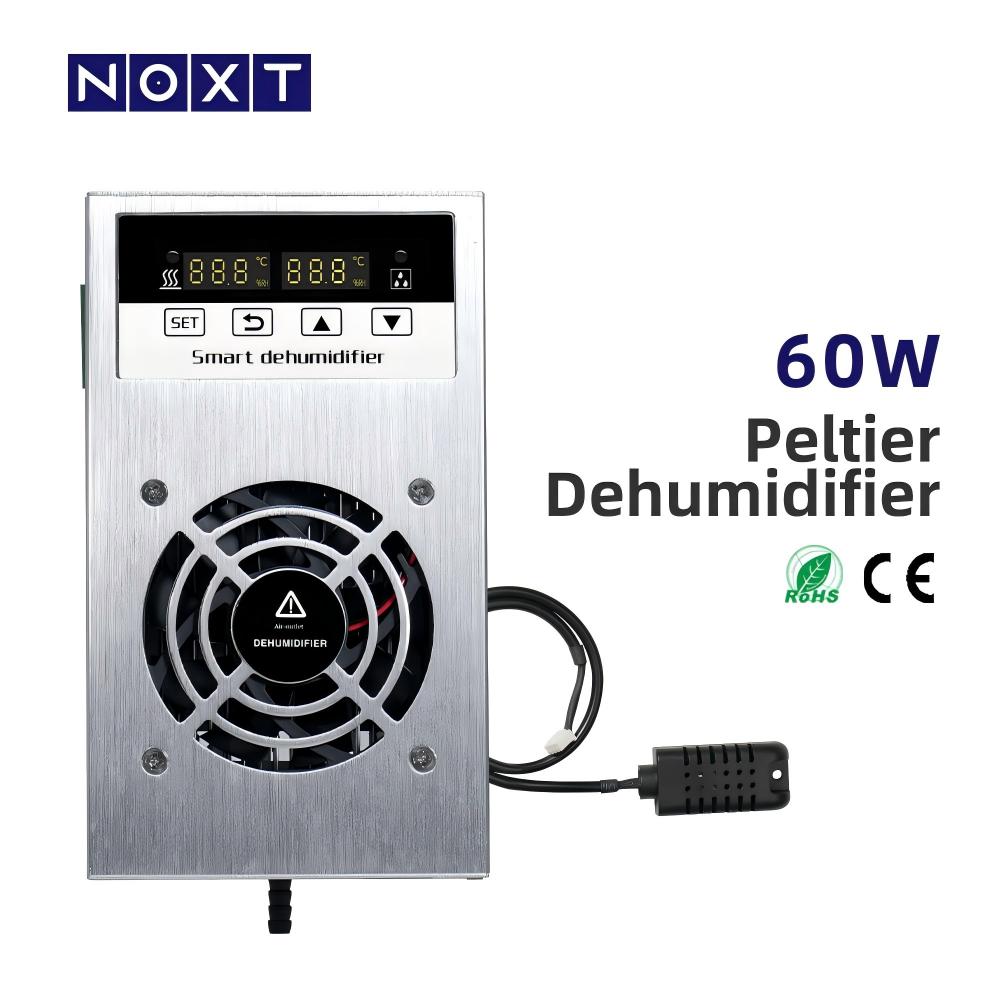
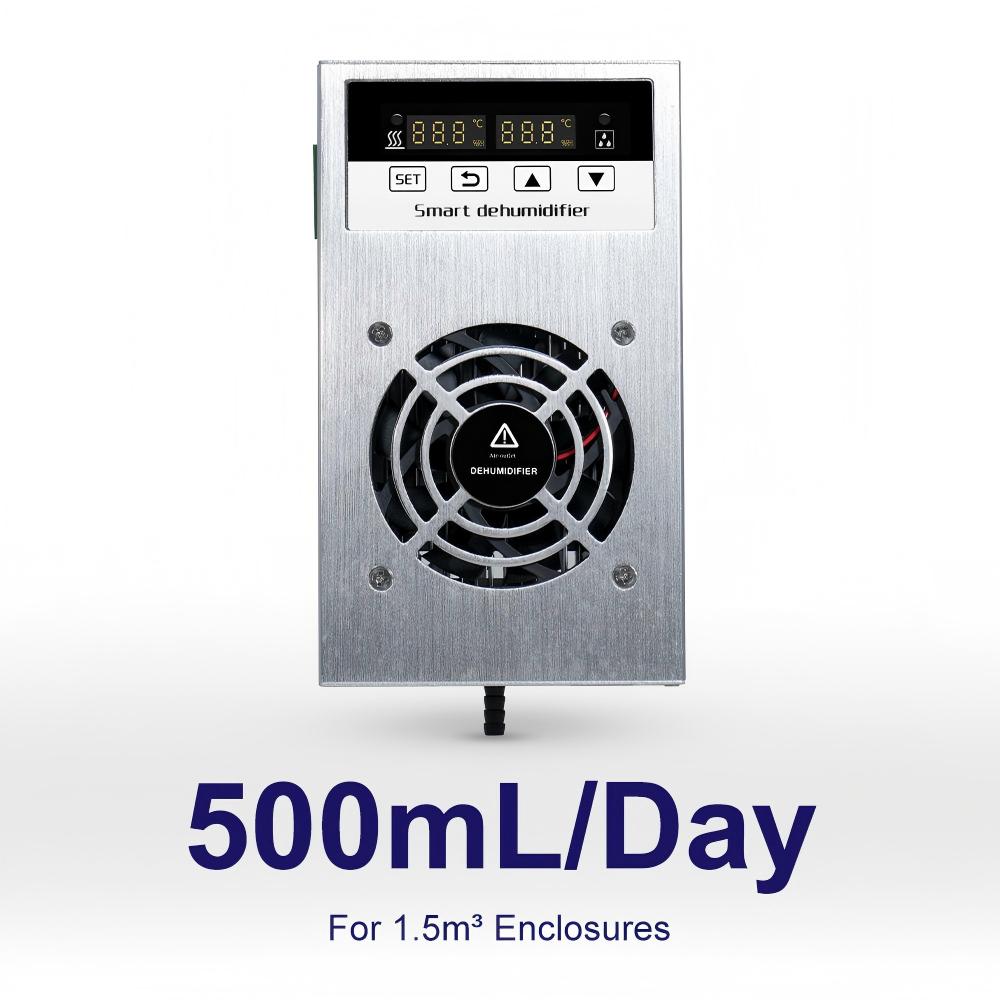
Use active dehumidification on the worst sites. Where heaters alone aren’t enough, usually because the air is so humid that you’d have to run the heat constantly, a thermoelectric cabinet dehumidifier is the next step.
It pulls water out of the air and holds the cabinet at a set humidity level, rather than just warming the air. Coastal charging hubs, underground parking decks, and humid substation environments are the classic candidates. These units are compact, DIN-mountable, and built to run unattended for years.

Reconsider the cooling strategy. If the cabinet cools with fan-forced outside air, that’s a humidity pump on muggy nights. On sites with serious humidity, look for designs that separate cooling from ventilation: heat exchangers, closed-loop cooling, or cooling that runs only when it needs to, so the cabinet isn’t inhaling humid air all night.
If you can’t change the hardware, at least make sure fans aren’t running when they don’t need to, and that any vents close or slow down during idle overnight periods.
Build it into the maintenance program. Add a condensation check to your routine service: open the cabinet on a cool morning and look for beading and early corrosion, check breather vents and filters, verify heaters and controllers are actually cycling, and watch the fault log for the weather signature.
Most operators already have the trucks and the schedules; they just don’t have “open the cabinet at dawn” on the checklist. That one change catches more incipient failures than any diagnostic software.
The honest business case
Here’s the calculation that matters to a network operator. A single DC fast charger can be down for days waiting on a power module, costing revenue and upsetting drivers who have come to expect chargers that just work.
A BESS cabinet with a corrosion-related fault can take a whole energy storage asset offline. The climate-control hardware that prevents all of it, a heater, a controller, a dehumidifier, is a few hundred dollars and a couple hours of labor per cabinet. That’s not an expense; it’s the cheapest reliability upgrade in the industry.
Condensation in outdoor EV chargers and battery cabinets isn’t exotic, and it isn’t going away, because the equipment will keep living outside where the air is humid.
But it’s entirely manageable once you stop treating the cabinet as a passive box and start treating it as part of the system. Keep the air dry, keep the surfaces above the dew point, and the morning dew stops being a fault and goes back to being just weather.