
Ask a room full of electricians whether moisture in an electrical panel is dangerous and you’ll get a shrug and a story. The shrug is because a little condensation seems harmless.
The story is because they’ve all seen what it does eventually: a panel that looked fine for years, then one bad morning, a ground fault, a flash, or a connection that burned slow and quiet until something stopped working. Moisture is the most underrated killer of electrical equipment, and it’s also the most preventable.
This isn’t a scare piece. It’s a practical checklist, the kind a facility team actually works through, for finding moisture damage early, understanding what it means for safety, and fixing the conditions that cause it.
If you’re responsible for panels, switchgear, or control cabinets, this is the stuff that keeps you out of the incident report.
What moisture actually does to a panel
Water doesn’t have to pour into a panel to damage it. The damage starts with condensation and works slowly. Every time moisture forms on a terminal, it starts oxidation. Corrosion adds resistance at the connection.
Resistance generates heat under load, and heat accelerates corrosion. Over months, a connection that once carried current cleanly starts running hot, and a lug that was tight starts to feel loose, because corrosion is literally eating the metal.
Then there’s the creepage problem. Dust and moisture together form a thin conductive film on the surfaces inside a panel. That film can create a leakage path between phases, or from a live part to ground, where no path should exist.
Leakage current starts small, trips nothing, and just warms things up, until a surge or a fault turns that weak path into a real one. This is how you get nuisance trips, crackling sounds, and the occasional panel fire that nobody can fully explain afterward.
For the safety people in the room: moisture is a recognized contributor to arc flash incidents. An arc flash is an explosive release of energy from a fault, and wet, corroded, or contaminated equipment is exactly the kind of environment where faults happen.
The National Electrical Code and NFPA 70E both lean on this in different ways, requiring equipment to be suitable for its environment and workers to treat energized equipment with respect. The practical translation: a panel in a damp location is a higher-risk panel, and it deserves a place on your risk list, not just your repair list.
Why insurance companies care
Insurance claims adjusters have seen the same pattern enough times that they ask about it. Moisture damage to electrical equipment is a common thread in fire claims and in business-interruption claims, because a corroded panel doesn’t usually fail during business hours when someone can catch it. It fails at 3 a.m., taking down a production line or a whole building.
And here’s the part that gets people’s attention: when a claim investigator finds corrosion that’s been building for years, with evidence nobody maintained the equipment, the conversation changes. Coverage questions, subrogation, denied claims, it all gets uglier when the record shows the damage was preventable.
You don’t need to love insurance companies to use this as motivation. The same documentation that protects your claim also protects your budget, because “the inspector flagged corrosion in three panels” is a much easier sell than “the panel failed and we lost a week of production.”
The inspection checklist
You don’t need fancy tools for the first pass. You need a cool morning, a flashlight, and the discipline to open the panels when condensation is actually visible, which means before the sun burns it off. Here’s the routine:
- Look for the beading: Open the panel early in the day and check the back, sides, and top of the enclosure, the coolest surfaces, for water droplets. If you find them, note the location and the date, because the pattern tells you whether it’s a recurring condensation issue or a one-time event.
- Check for the haze and the crust: Corrosion often starts as a dull haze on copper or a faint rust on steel, then progresses to green crust on copper and brown scale on steel. Pay special attention to lugs, bus bars, breaker terminals, and the ground bar, the places current actually flows.
- Smell it: A faint burning or “hot electrical” smell, or the acrid smell of something that’s been running warm, is a red flag even when nothing looks wrong. It usually means a connection is overheating, and moisture-driven corrosion is a common reason.
- Feel for warmth: With the panel under load, a thermal scan or just a careful hand test on the cover can catch a hot connection. If you have an IR camera, this is one of its best uses, but scan on a day when the panel is actually loaded.
- Watch the breaker behavior: Breakers that trip for no clear reason, or that feel loose when you switch them, are telling you something. Corrosion inside a breaker can make it sluggish, which is a serious problem, because a breaker that doesn’t trip when it should is a fire waiting for a spot.
- Test when it makes sense: For larger gear, insulation-resistance testing with a megohmmeter catches degraded insulation that visual inspection misses. If your readings are low or erratic and they improve on dry days, you’ve got a moisture problem with a name on it.
The fix list, in order
When you find moisture damage, resist the urge to clean it up and move on. Cleaning the crust off a terminal without fixing why it corroded just resets the clock. Work the list in this order:
- Stop the water from getting in: Check the obvious entry points first: conduit entries, cable glands, gaskets, rain hoods, and drains. Seal anything that’s letting water or humid air in. If water is actively entering, nothing else on this list matters until that’s fixed.
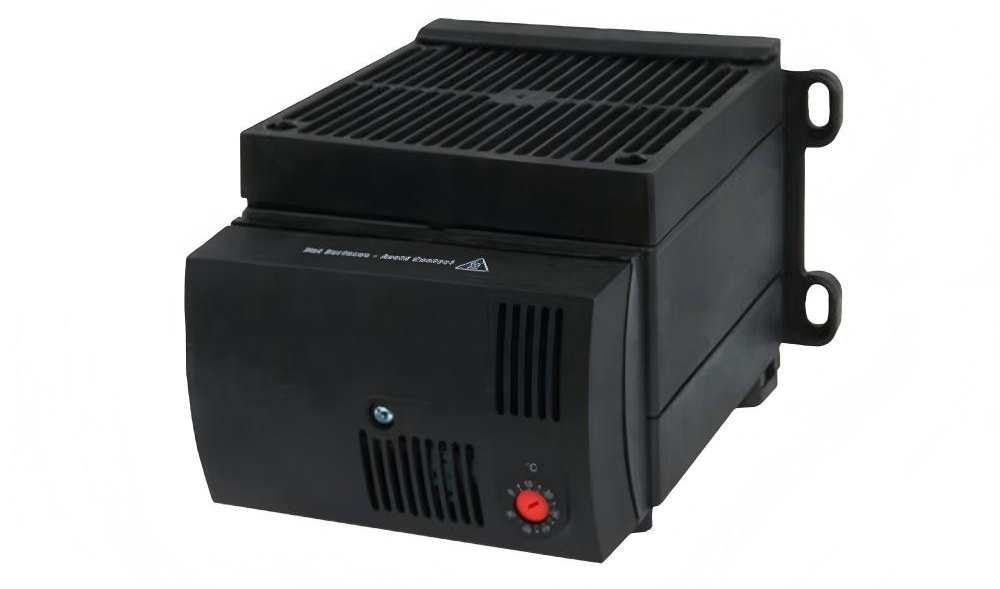
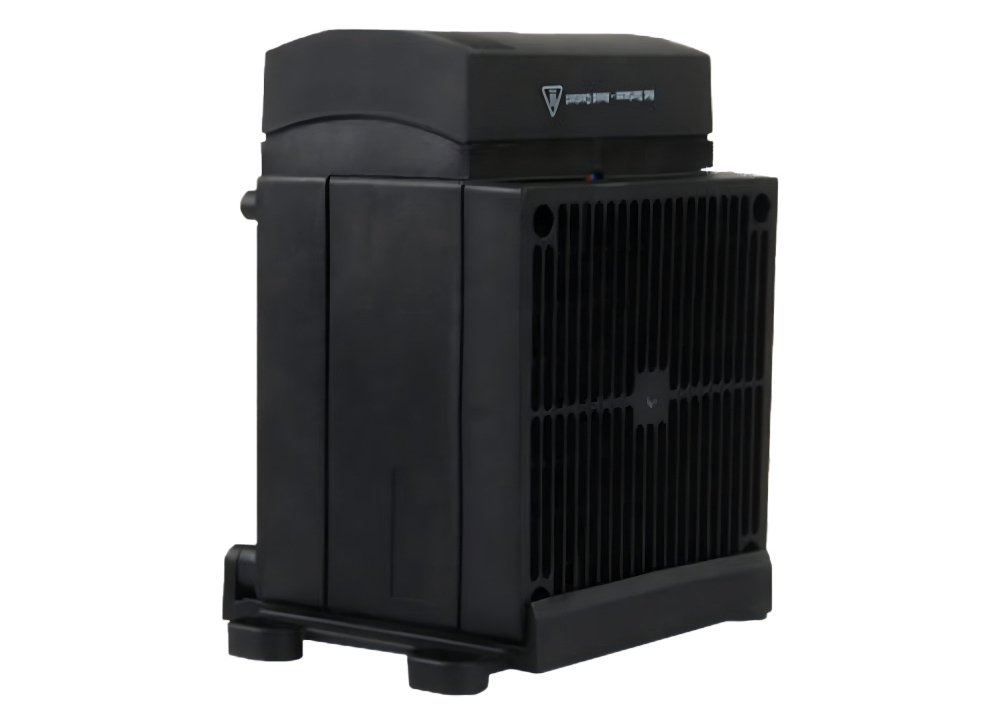
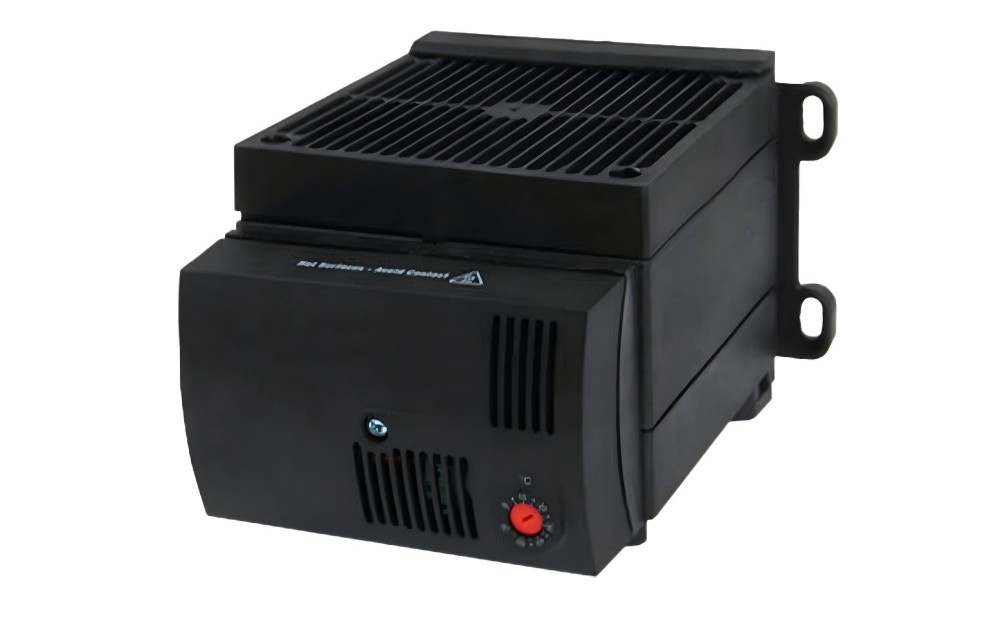
- Fix the environment, then the panel: A cabinet fighting a chronically damp space, like a leaky substation building or an unventilated electrical room, is working against the site. If the whole space is the problem, that’s an area-level project with its own solution. At the cabinet itself, the protection is enclosure climate control: controlled heat to keep the internals above the dew point, or a compact dehumidifier on genuinely wet sites.
- Control the panel climate: For panels in unconditioned spaces, add a thermostatically or humidity-controlled enclosure heater to keep the internals above the dew point. For genuinely wet sites, a compact enclosure dehumidifier that actively removes moisture is the upgrade. Both are standard hardware, sized to the cabinet, and cheap compared to the equipment they protect.
- Clean up what’s already damaged: Once the moisture source is handled, clean the corrosion off accessible terminals, re-torque connections to spec, and replace anything that’s pitted or degraded. If corrosion has gotten inside breakers or onto bus bars, call in a professional and be ready to replace the affected gear. Some damage doesn’t clean up.
- Document everything: Photograph the corrosion, note the date, and record what you fixed. That record is your maintenance trail, your insurance protection, and your justification for the next budget cycle, all in one.
Building it into the schedule
The panels that fail are almost never the ones on a maintenance schedule; they’re the forgotten ones. So put this on the calendar, not just in the toolbox.
Seasonal checks work well in most climates, because condensation clusters in spring and fall, and an annual check on the coolest morning of the season catches the pattern that a noon-time walkthrough never sees.
Tie the panel check into whatever inspection program you already run, whether that’s NFPA 70E arc-flash work, a preventive maintenance program, or the insurance inspector’s annual visit.
Here’s the honest summary: moisture in electrical panel systems is dangerous in the way most electrical problems are dangerous, slowly, quietly, and only if you ignore it.
It corrodes connections, creates leakage paths, feeds arc flash risk, and shows up years later as an equipment failure or a claim. But it’s also one of the most fixable problems in the building.
Find the water, stop it at the source, keep the panel above the dew point, and put the inspection on a schedule. Do that and the panel you’re responsible for will be the one that never makes it into the incident report.